What the red palm weevil is, how it spreads and the signs to watch for. With photos of each stage and a quick check you can do yourself.
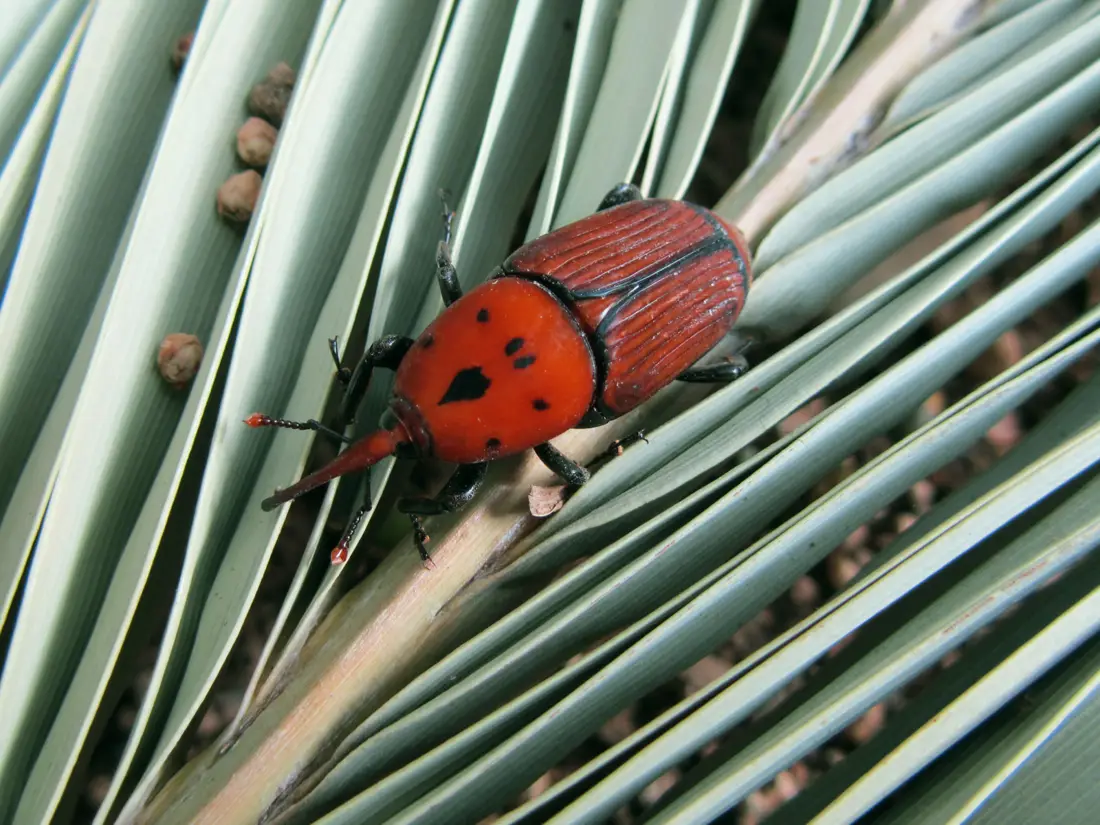
The red palm weevil (Rhynchophorus ferrugineus) is a reddish beetle with a long snout, originally from Asia. It has been attacking palms in Andalusia since 1995.
The real danger isn't the adult beetle but its larvae. The female lays her eggs in wounds and at the base of the leaves. The larvae then eat the palm from the inside for months, with nothing to see from the outside.
The sooner you spot it, the better your palm's chances. These are the signs we see on Canary Island date palms, the species hit hardest.
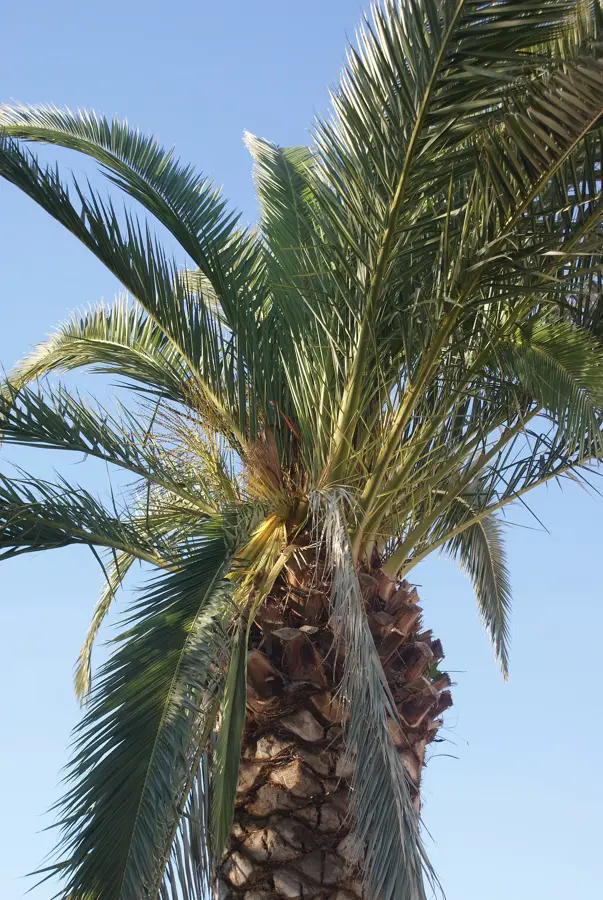
The young leaves in the centre bend over and lose their upright position. It's the sign people miss most often.
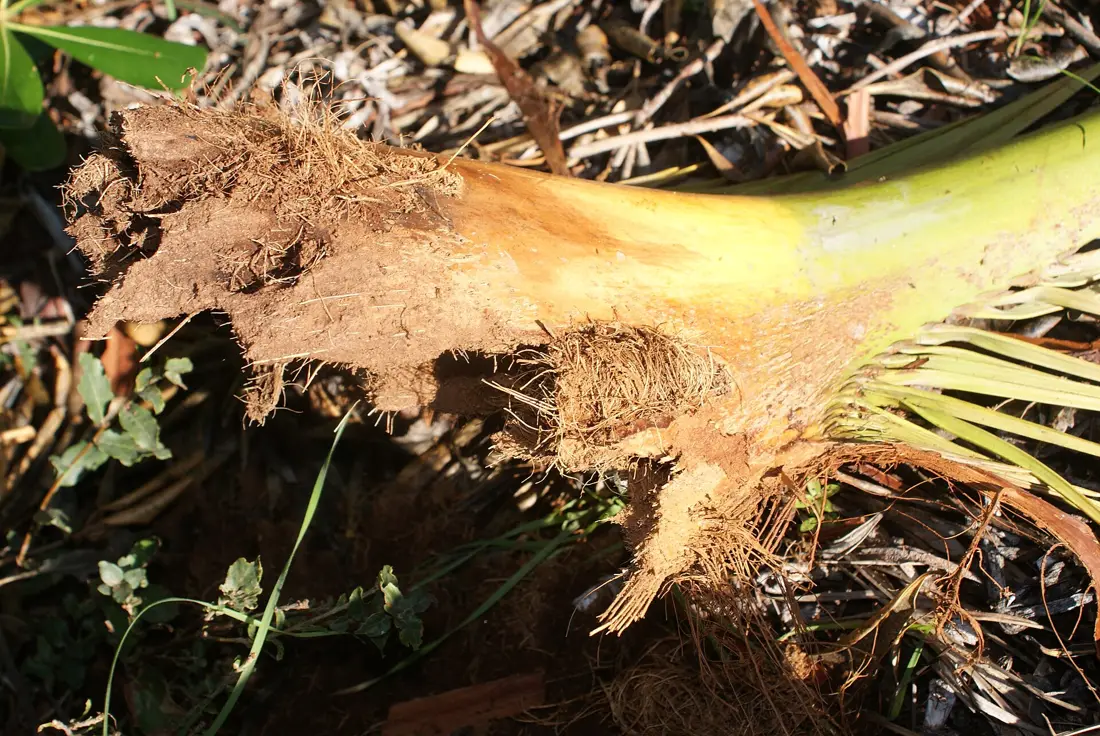
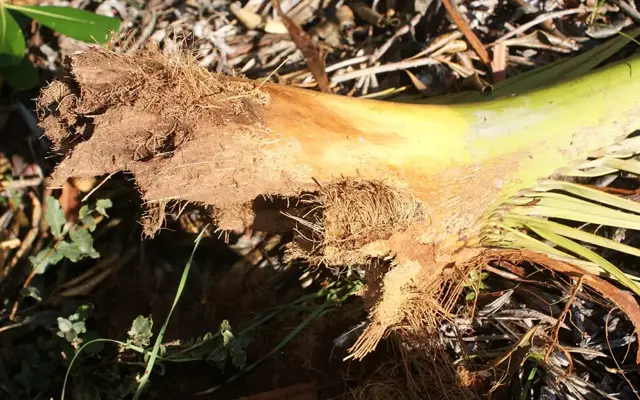
Fibres, cocoon remains and holes appear at the base of the leaves. Sometimes there's a sour smell too.
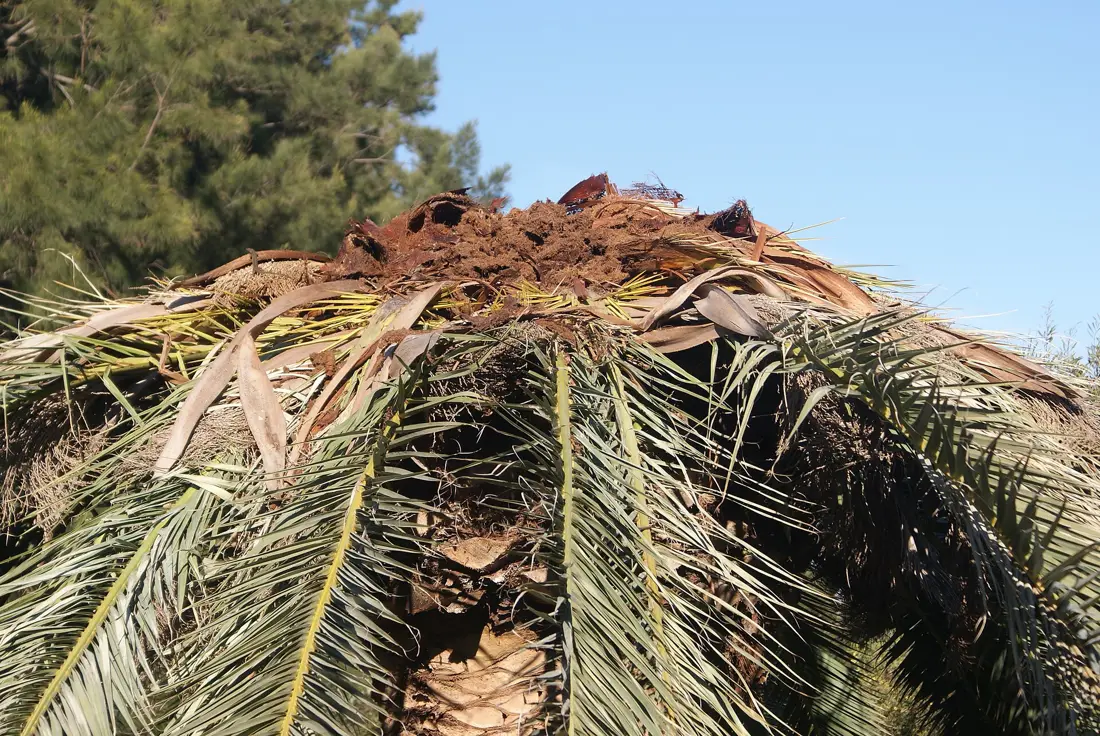
The leaves fall outwards and the crown takes on an umbrella shape. If the central bud is damaged, the palm dies.
Photos: Küchenkraut, CC BY-SA 3.0 (Wikimedia Commons)
Send us 3 photos: the whole crown, the centre of the crown, and the base of the leaves with the trunk. We'll tell you what we see and what to do next.
Send photos in the chatVia WhatsApp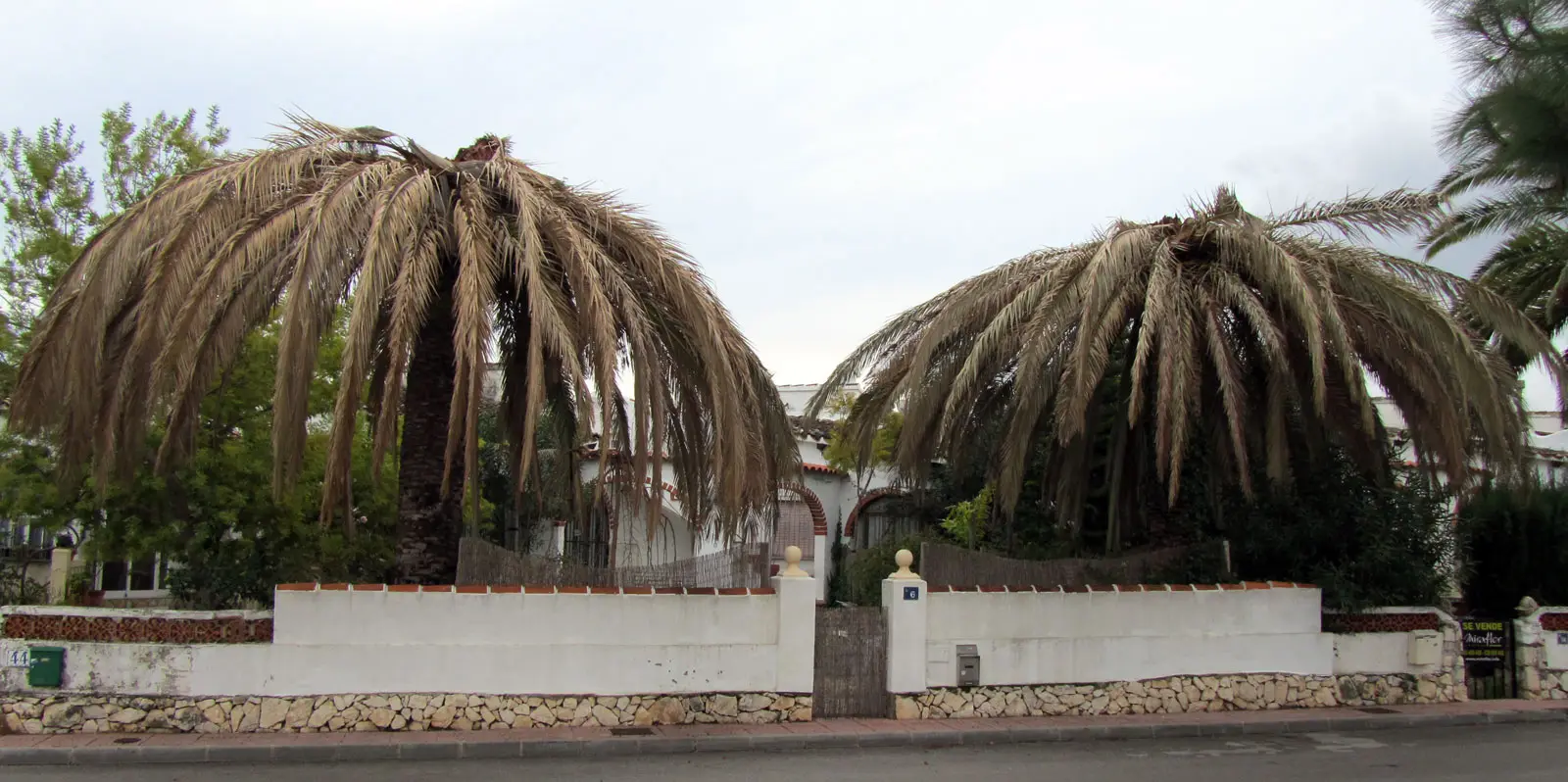
The larvae work inside the palm for months. Symptoms only show once the infestation is well advanced.
One affected palm puts the other palms in your garden, and your neighbours' palms, at risk.
A weakened crown can fall onto your house, your pool, a car or a person.
If the palm can't be saved, the owner is legally required to remove it following an official protocol. Prevention costs far less.
Photo: Katja Schulz, CC BY 2.0
The most affected. The damage is concentrated in the crown: the central leaves droop and turn from yellow to reddish brown, and in the end the crown collapses.
Here the weevil also attacks the base, the trunk and the offshoots. Look out for a reddish or black ooze with fibres on the trunk.
The regulations also cover Washingtonia, the European fan palm, Trachycarpus, Butia, Brahea, Syagrus, Livistona, Sabal and the coconut palm, among others.
It depends on how much damage the larvae have done inside, and that's hard to see from the outside. That's why we always inspect the palm first.
Sources: Junta de Andalucía, red palm weevil FAQ (in Spanish), recommendations (in Spanish) and BOJA no. 67, 2010 (in Spanish); Spanish Ministry of Agriculture, Paysandisia archon fact sheet (in Spanish). Red palm weevil photos: Wikimedia Commons (Katja Schulz, CC BY 2.0; Küchenkraut, CC BY-SA 3.0).
Plain-English guides if you'd like to know more. Already know what you need? Just ask us for a quote.
Tell us what's happening and add photos. We'll get back to you quickly, in Spanish, English, German or Dutch.