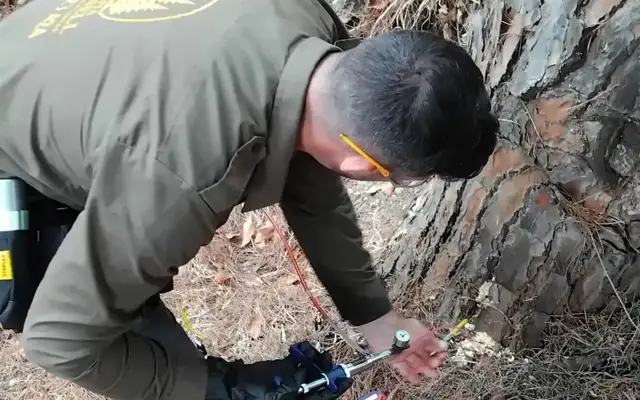
Why we treat in autumn, why the caterpillars are dangerous for people and dogs, and what to do if they're already in your garden.
The caterpillars are still small and not yet stinging. We treat by endotherapy until the end of November: one treatment a year, from the trunk. First visit free.
The pine processionary (Thaumetopoea pityocampa) is a night-flying moth. It mainly attacks pines and can also affect cedars. Its life cycle determines the best time to treat.
The adults emerge from the ground and lay their eggs on the pines.
The caterpillars hatch and start eating the pine needles.
They build white nests in the crown and become irritating to the touch.
They come down in single file to bury themselves in the ground. On the coast, sometimes as early as December or January.
We treat in October and November, while the caterpillars are small and not yet irritating.
The caterpillars' hairs contain a toxin (thaumetopoein). They break off and float through the air, so you don't need to touch them. They cause skin and eye irritation and allergic reactions. Dogs are especially vulnerable: sniffing or biting the caterpillars can cause serious injuries to their muzzle and tongue.
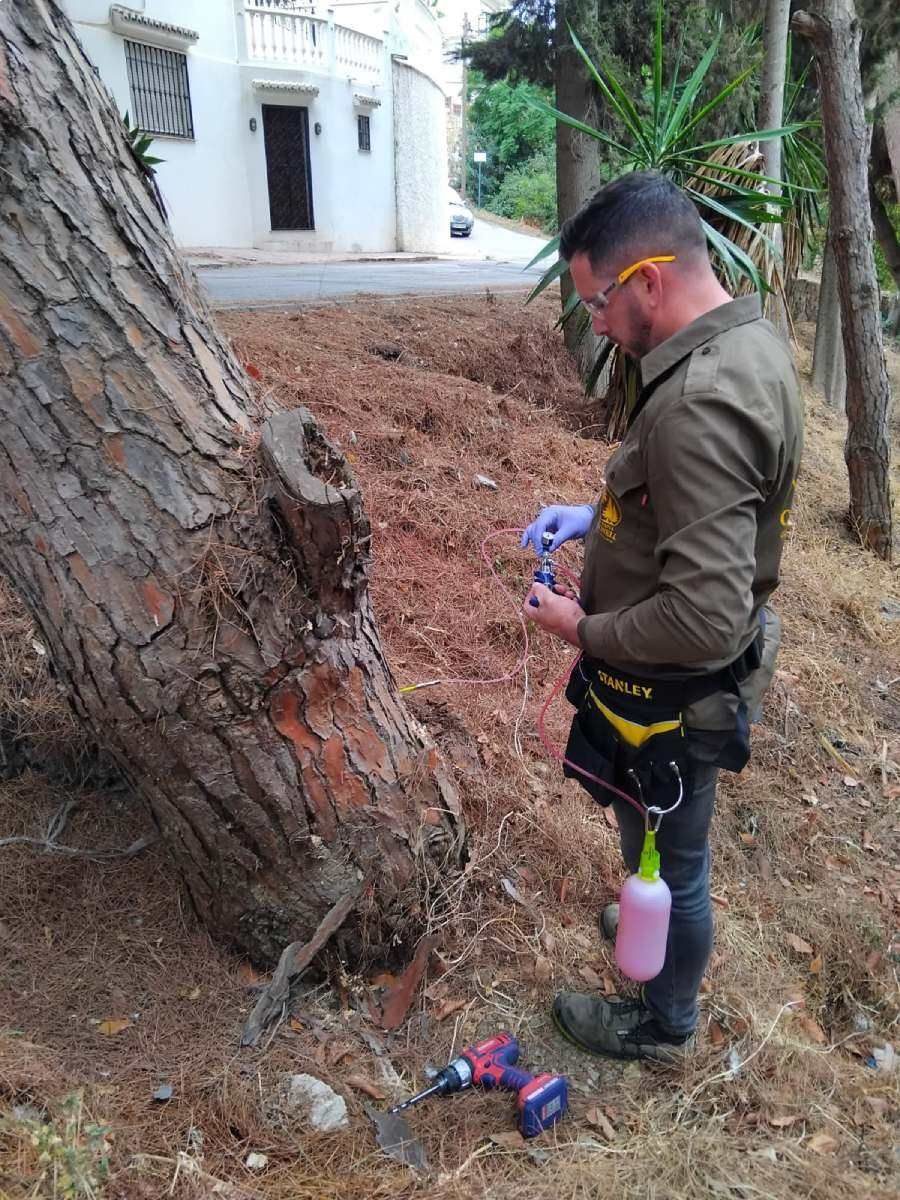
The best time is autumn (October to November). One treatment a year is enough.
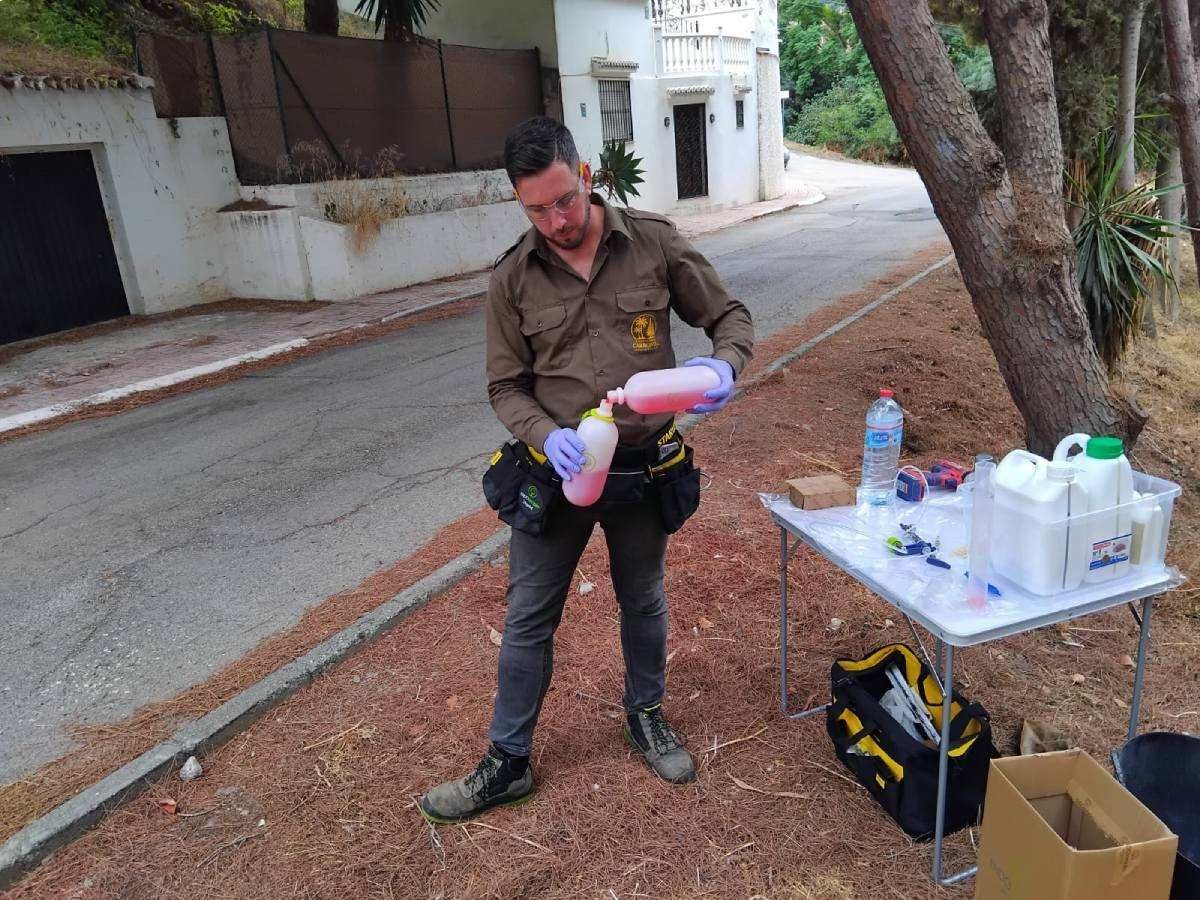
Missed the treatment window and your pine is full of nests come spring? We remove them using a cherry picker and protective suit, without damaging the tree.
Once a year, in autumn (October to November). If nests have already appeared by spring, we can remove them too.
Because in October and November the caterpillars are small and not yet irritating. If you wait until you see the nests or the processions, the risk to people and dogs is already there.
Move it away straight away, rinse its mouth with lukewarm water without rubbing and take it to an emergency vet. Don't wait to see if it gets better.
Sources: Community of Madrid, Balearic Islands Government, Valencian Regional Government and Barcelona City Council.
Plain-English guides if you'd like to know more. Already know what you need? Just ask us for a quote.
Tell us what's happening and add photos. We'll get back to you quickly, in Spanish, English, German or Dutch.
Red palm weevil treatment and tree care across the Axarquía, Málaga and the Costa del Sol.